
AI Content Detection: Accuracy, Limitations, and Responsible Use
AI detectors give a probability, not a verdict. Learn how they work, where they fail, and how to use them without treating a score as proof.
By SEO Tool Orbit5 min read
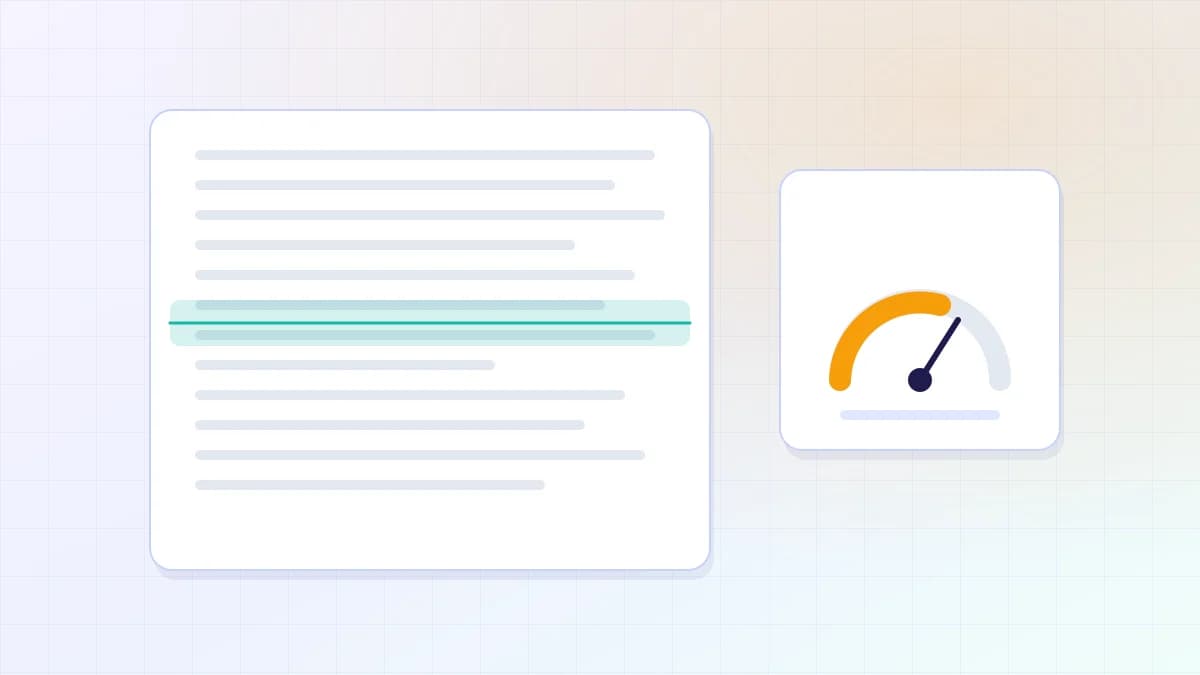
AI content detectors promise a simple answer to a hard question: was this text written by a person or a machine? Teachers, editors and clients increasingly use them. The trouble is that the answer they give is a statistical guess, and treating that guess as proof has led to real people being wrongly accused.
In short: detectors estimate how "machine-like" a text looks; they can be wrong in both directions, they are easy to fool, and their scores are not evidence on their own. Use them, if at all, as one signal that prompts a human conversation — never as a verdict.
How AI detectors work, at a high level
Most detectors rely on patterns in how language models generate text. Models tend to choose likely words, so machine text is often more predictable than human text. Two common signals:
- Predictability (often called perplexity): how surprising each word is to a language model. Very predictable text looks more machine-like.
- Variation (sometimes called burstiness): how much sentence length and structure vary. Human writing often mixes long and short sentences more unevenly.
Some detectors are classifiers trained on labelled examples of human and AI text. Either way, the output is a probability that the text resembles the AI examples the detector learned from.
False positives and false negatives
Every detector makes two kinds of mistakes:
| Error | What happens | Who it harms |
|---|---|---|
| False positive | Human writing is flagged as AI | Writers accused of something they didn't do |
| False negative | AI text passes as human | Anyone relying on the tool for assurance |
False positives are the more serious problem, because the consequences fall on real people. Text is more likely to be flagged when it is short, formulaic (legal, technical or templated writing), heavily edited for clarity, or written by people writing in a second language. A 2023 study published in the journal Patterns found that several popular detectors frequently misclassified essays by non-native English writers as AI-generated.
False negatives are easy to produce: light paraphrasing, mixing human and AI sentences, or asking a model to vary its style can all lower a detection score.
Why a detector score is not proof
- There is no ground truth in the text. The same sentence could be written by a person or a model; there is no hidden signature to find.
- Models change constantly. A detector trained on one generation of models may perform worse on the next.
- Even the builders have backed away. OpenAI withdrew its own AI text classifier in 2023, citing its low rate of accuracy.
- Scores aren't comparable. Different detectors can give the same text very different results.
When detection can be appropriate
Used carefully, a detector can still play a small part:
- Triage at volume. An editor reviewing many unsolicited submissions might use scores to decide what to read more closely — not what to reject.
- Prompting a conversation. A high score can be a reason to ask a writer about their process and sources.
- Policy checks you've agreed on. If your contributors agreed to disclose AI use, a score can remind you to ask whether disclosure was made.
In every case, a person makes the decision, and the writer gets to respond.
Better questions than "was this AI?"
For publishers, the more useful questions are about quality and accountability:
- Is every factual claim accurate and sourced?
- Does the piece contain real expertise, examples or data?
- Is it original, or a rewording of what already ranks?
- Did the author follow your disclosure policy?
These questions apply whether or not AI was involved — which is why our AI content writing guide focuses on editing and fact-checking rather than avoiding detection.
Practical alternatives to relying on scores
- Ask for process evidence: outlines, notes, sources or revision history.
- Compare versions: Text Compare shows exactly what changed between a draft and a revision, which tells you far more about someone's process than a detector score.
- Check consistency: does the piece match the writer's other work and their knowledge in conversation?
- Review mechanics separately: a spelling and grammar check tells you about correctness, not authorship — don't mix the two.
Responsible interpretation: a checklist
- Never act on a score alone.
- Use more than one signal, and prefer process evidence.
- Be especially careful with short texts and second-language writers.
- Tell people when detection tools are used and how results are handled.
- Give the writer a chance to explain before any decision.
- Record how each decision was reached, so it can be reviewed if challenged.
Writing a fair AI-use policy
If you commission or publish other people's writing, a clear policy prevents most disputes before they start. A practical policy covers:
- What's allowed. For example: AI may be used for outlines, research summaries and copy-editing suggestions, but not for quotes, data or first-hand accounts.
- What must be disclosed, and to whom — the editor, readers, or both.
- What evidence of process you may ask for, such as notes, sources or drafts.
- How concerns are handled: who reviews them, how the writer responds and what happens next.
- Whether detection tools are used at all, and a commitment that their scores never decide an outcome on their own.
Share the policy before work begins. Writers can't follow rules they haven't seen, and a policy agreed in advance is far easier to apply fairly.
If your own writing is flagged
Being wrongly flagged is stressful, but it is usually resolvable with evidence:
- Share your drafts, notes and version history — many document editors keep revision history automatically.
- Explain your research process and sources.
- Point out features detectors are known to misread, such as formulaic or technical writing.
- Ask what evidence, beyond the score, the concern is based on.
Keeping drafts and notes as you work is a simple habit that makes this conversation easy if it ever happens.
Frequently asked questions
Can any detector reliably identify AI text?
No detector is reliable enough to serve as proof. Accuracy varies by text length, topic, style and the model that produced it.
Does editing AI text make it "human"?
Substantive editing — adding facts, examples and judgement — makes it better. Whether a detector notices is beside the point.
Do search engines use AI detectors?
Search engines say they focus on whether content is helpful and on spam policies, not on how it was produced. See AI writing vs human writing for where each approach fits.
Are paid detectors more accurate than free ones?
Price is not a reliable guide to accuracy. Whatever you use, the same limits apply: a score is a probability, and it should never be the only evidence.
Can detectors tell which AI tool wrote a text?
Some claim to, but attributing text to a specific model is even less reliable than detecting AI involvement at all. Treat such claims with extra caution.
What can educators do instead of relying on scores?
Many focus on process: drafts submitted along the way, short conversations about the work, and assignments that draw on class discussion or personal experience. These assess learning directly rather than guessing at authorship.
Next step
If you manage writers, replace "detector score" in your process with a short checklist: sources checked, real examples present, disclosure followed. For your own writing, the grammar checking guide shows how to polish text without losing your voice.
- #AI Detection
- #Content Writing
- #Editing
Related reading
AI Content Writing
AI Writing vs Human Writing: When Should You Use Each?
AI and human writers are good at different things. Here's a practical comparison and a hybrid workflow that uses each where it's strongest.
5 min read
AI Content Writing
AI Content Writing: How to Create Helpful Articles Without Losing Your Voice
AI can draft quickly, but readers can tell when nobody was home. This process keeps your expertise, examples and voice at the centre of AI-assisted writing.
6 min read
AI Content Writing
AI-Powered Grammar and Spelling Checks for Better Content
Grammar tools catch slips humans miss, but they can also flatten your style or change your meaning. Here's how to get the benefits without the side effects.
6 min read
AI Content Writing
How to Build a Content Brief with AI and Search Intent
A good brief decides most of an article's quality before anyone writes a word. Here's how to build one with AI help, and a template you can copy.
5 min read