
AI Writing vs Human Writing: When Should You Use Each?
AI and human writers are good at different things. Here's a practical comparison and a hybrid workflow that uses each where it's strongest.
By SEO Tool Orbit5 min read
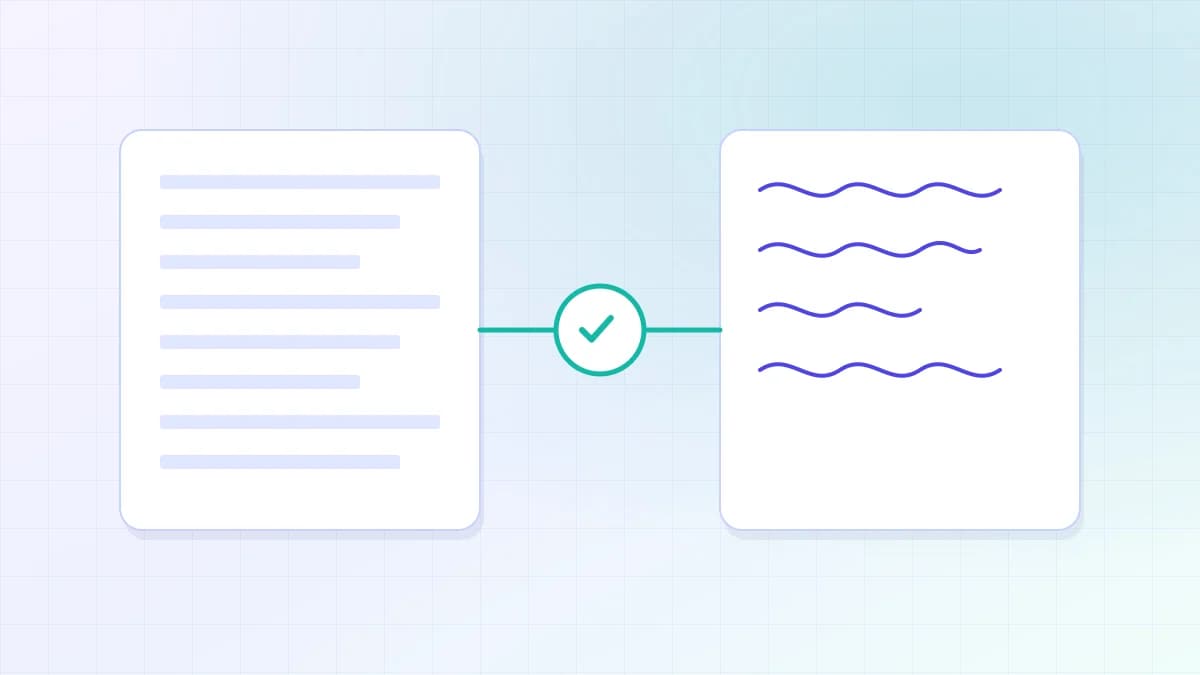
The "AI versus human" debate is usually framed as a contest. In practice, the question is more practical: for this piece of content, which parts benefit from speed and breadth, and which parts need judgement, experience and accountability? Answer that honestly and the choice becomes obvious.
In short: AI is fast at structure, summaries, variations and routine drafting. People are essential for original insight, first-hand experience, accuracy and responsibility. Most good content today combines both, with a person in charge of what gets published.
What AI writing does well
- Speed. Outlines, first drafts and alternative phrasings in seconds.
- Breadth. A quick overview of what is commonly said about a topic.
- Summarising material you provide. The Text Summarizer condenses notes or reports into a paragraph or bullets without adding facts.
- Consistency at scale. Product descriptions or meta descriptions that follow a fixed pattern.
- Getting unstuck. A blank page is easier to fix when there is something on it.
Where AI writing falls short
- Accuracy. Models can state false information fluently.
- Experience. It hasn't used your product, met your customers or made your mistakes.
- Originality. Output gravitates toward the average of what already exists.
- Accountability. Someone still has to stand behind the claims.
- Voice. Default output sounds like everyone and no one.
A practical comparison
| Task | AI | Human | Best approach |
|---|---|---|---|
| Research overview | Fast, broad, may be wrong or dated | Slower, can judge sources | AI to map the topic; human to verify with sources |
| Outline | Good starting structure | Knows what readers really need | AI draft, human reorders and cuts |
| Original insight | Weak | Strong | Human |
| Examples and case details | Generic or invented | Real | Human |
| Routine sections | Efficient | Tedious | AI draft, human edit |
| Fact-checking | Unreliable | Essential | Human |
| Copy-editing | Helpful suggestions | Final judgement | Tool suggestions, human decides |
| Creative concept | Many options | Chooses what fits | AI to brainstorm, human to decide |
Research, creativity, expertise and editing
Research
Use AI to list subtopics and questions you might have missed, then go to primary sources: documentation, studies, your own data. Never cite something you only read in an AI answer.
Creativity
AI can generate twenty headline options; a person knows which one fits the brand and isn't misleading. Treat AI ideas as raw material.
Expertise
Expertise shows in specifics: why a method works, when it doesn't, what it costs, what went wrong last time. This is the part readers value most and AI can't supply.
Editing
Spelling and grammar tools are excellent assistants — the Spelling & Grammar Checker flags spelling, grammar, punctuation and style issues — but the writer decides which suggestions keep the meaning intact. Our grammar checker guide covers how to review suggestions.
Accountability
Someone has to stand behind what's published — answer questions about it, correct it if it's wrong and take responsibility for its advice. That person should have read and approved every line, however the draft was produced.
Hybrid workflows that work
The "human skeleton" workflow
- A person writes the outline with the key points, examples and opinions.
- The AI Content Writer expands routine sections, leaving placeholders where facts are needed.
- The person rewrites, fills placeholders from real sources and adds detail.
The "AI draft, heavy edit" workflow
- AI produces a full first draft from a detailed brief.
- An editor rewrites at least the introduction, examples and conclusion, and checks every fact.
- Text Compare confirms how much changed — if the answer is "not much", the draft isn't ready.
The "human only" cases
Some content should stay human-written from the start: personal stories, sensitive topics, legal or medical guidance, and anything where your reputation depends on a specific judgement.
Keeping content original and accurate
- Add at least one thing per article that isn't available elsewhere: data, a test, a real example.
- Verify every factual claim against a source you could link to.
- Read the final piece aloud; rewrite anything you wouldn't say.
- Disclose AI assistance where your audience would expect it.
Worried about detectors? Read why detector scores aren't proof — quality and honesty are better uses of your time.
Choosing the approach for each content type
| Content type | Suggested approach | Why |
|---|---|---|
| Product descriptions from a spec sheet | AI draft, human edit | Patterned text built from facts you supply |
| Meta descriptions | AI options, human chooses and edits | Short, constrained and easy to review |
| How-to guides | Human skeleton, AI expansion | Steps need first-hand accuracy; the prose can be assisted |
| Opinion and thought leadership | Human | The point of the piece is your judgement |
| Case studies | Human, with AI to summarise interviews | Details must be real and approved by the customer |
| Legal, medical or financial guidance | Human expert, with expert review | Errors carry real consequences |
| Internal summaries and notes | AI, with a quick human check | Low risk, large time saving |
Cost and time: an honest view
AI drafting makes the first version much faster. It doesn't make research, fact-checking or approval faster, and a heavily generic draft can take longer to fix than writing from a good outline. When you compare approaches, measure the whole process — from brief to published, accurate article — not just the drafting step.
There is also a longer-term cost. A site full of interchangeable articles is hard to tell apart from its competitors, and readers who find nothing new tend not to come back. Time saved on routine sections is best reinvested in what readers value: original examples, data and clear recommendations.
Signs a piece needs more human input
- You could swap your brand name for a competitor's and nothing else would need changing.
- There are no examples, numbers or screenshots from your own work.
- Every paragraph is the same length and shape.
- The conclusion repeats the introduction.
- Claims appear without any source or example to support them.
- You can't say what a reader will do differently after reading it.
Frequently asked questions
Is human writing always better?
Not for every task. For routine, patterned text, an edited AI draft can be just as good and much faster. For insight and accuracy, human writing wins.
How much editing does AI text need?
Enough that every claim is verified and the piece contains something only you could add. For most articles that means substantial rewriting, not a quick proofread.
Will readers mind AI assistance?
Readers mind being misled or getting thin content. Be transparent where it matters and make sure the article is genuinely useful.
Should I tell readers when AI helped write a piece?
Follow your audience's expectations and any rules in your industry. Where readers would reasonably want to know — or where AI did most of the writing — saying so builds trust.
Can AI match my writing style?
It can imitate patterns from examples you provide, but it can't supply the experiences and opinions behind your style. Use examples to get closer, then edit in your own voice.
Is it cheaper to use AI for all content?
Drafting costs less, but editing, fact-checking and the cost of publishing something wrong don't go away. For content that matters to your reputation, budget for real human time.
Next step
Try the "human skeleton" workflow on your next article and compare the time spent and the result with your usual approach. For the full process, see how to create helpful articles with AI, and for scaling it across a team, the AI-assisted content marketing workflow.
- #Content Writing
- #Editing
- #AI Detection
Related reading
AI Content Writing
AI Content Writing: How to Create Helpful Articles Without Losing Your Voice
AI can draft quickly, but readers can tell when nobody was home. This process keeps your expertise, examples and voice at the centre of AI-assisted writing.
6 min read
AI Content Writing
AI Content Detection: Accuracy, Limitations, and Responsible Use
AI detectors give a probability, not a verdict. Learn how they work, where they fail, and how to use them without treating a score as proof.
5 min read
AI Content Writing
AI-Powered Grammar and Spelling Checks for Better Content
Grammar tools catch slips humans miss, but they can also flatten your style or change your meaning. Here's how to get the benefits without the side effects.
6 min read
AI Content Writing
How to Build an AI-Assisted Content Marketing Workflow
AI speeds up parts of content marketing. A clear workflow decides whether that speed produces better content or just more of it.
6 min read